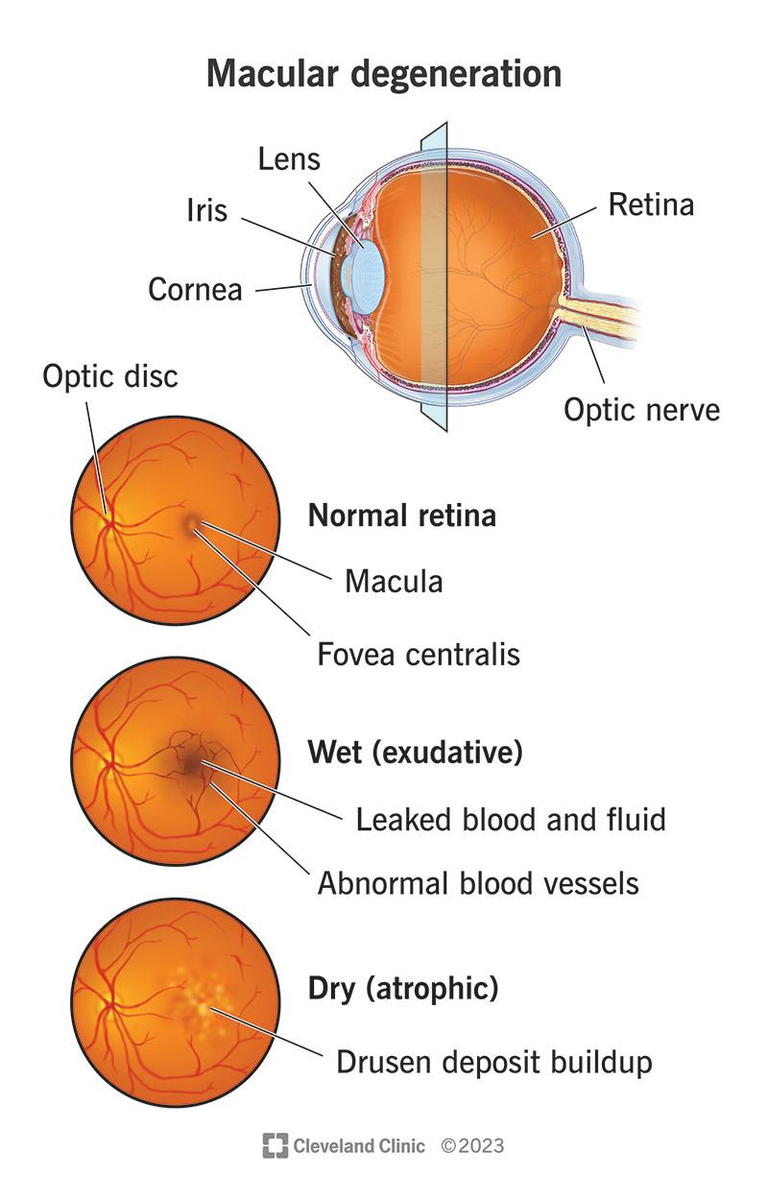
Legacy Optical and Vision is here to provide information on macular degeneration, a common eye condition. Macular degeneration, also known as age-related macular degeneration (AMD), is a progressive eye disease that affects the macula, a small but crucial part of the retina responsible for central vision.
There are two main types of macular degeneration: dry AMD and wet AMD. Dry AMD is more common and involves the gradual breakdown of light-sensitive cells in the macula, leading to a slow loss of central vision. Wet AMD, on the other hand, is characterized by the growth of abnormal blood vessels beneath the retina, which can leak fluid and cause rapid and severe central vision loss.
Symptoms of macular degeneration may include:
- Blurred or distorted central vision.
- Difficulty recognizing faces.
- Straight lines appearing wavy.
- Decreased color intensity.
- Dark or empty spaces in the central vision.
It's important to note that macular degeneration often progresses gradually, and early detection is crucial for effective management.
As an optometrist, I would recommend regular eye exams, especially for individuals aged 50 and older or those with a family history of macular degeneration. Early detection allows for prompt intervention and better outcomes.
Treatment approaches for macular degeneration vary depending on the type and severity:
- Dry AMD: Currently, there is no cure for dry AMD, but certain lifestyle changes, such as a diet rich in antioxidants and omega-3 fatty acids, may help slow its progression. Monitoring and managing risk factors like smoking and high blood pressure are also essential.
- Wet AMD: Treatment for wet AMD often involves injections of anti-VEGF drugs into the eye to reduce the growth of abnormal blood vessels. These injections can help stabilize or even improve vision in some cases.
Regular follow-up visits with your optometrist are crucial for monitoring the condition and adjusting the treatment plan as needed. Additionally, low vision aids and rehabilitation services may be recommended to help individuals adapt to changes in their vision.
If you notice any changes in your vision or experience symptoms associated with macular degeneration, I strongly advise scheduling an appointment with your eye care professional for a comprehensive eye exam. Early intervention can make a significant difference in preserving your vision and maintaining a good quality of life.
|